
Description
TEAC CDC 60 Normal Position. Compact Cassette. Classic Vintage.
TEAC was founded in Japan in 1953, when brothers Katsuma and Tomoma Tani established the Tokyo Television Acoustic Company in Tokyo. From the very beginning, the company was involved in professional audio technology and sound recording equipment. A few years later, the Tokyo Electro-Acoustic Company was established, and in 1964 the two companies were merged to form TEAC Corporation. The name TEAC comes from the words Tokyo Electro-Acoustic Company.
Reel-to-reel tape recorders quickly became one of TEAC’s most important areas of activity. The company built an excellent reputation for its robust tape transport mechanisms, precision engineering and designs intended for both demanding home users and professional applications. During the 1960s and 1970s, TEAC reel-to-reel tape recorders became increasingly popular outside Japan, particularly in the United States and Europe. Models such as the A-4010, A-6010, A-3340 and the later X series became some of the most recognizable Japanese reel-to-reel machines. One particularly important model in the company’s history was the TEAC A-3340 – a four-track reel-to-reel recorder that allowed individual tracks to be recorded independently. This design made multitrack recording possible outside a professional studio and played an important role in the development of home and semi-professional music recording. The experience gained from equipment of this type later contributed to the development of TASCAM, a TEAC brand focused on professional and studio recording equipment. During the 1970s and 1980s, TEAC also became an important manufacturer of cassette decks. The company used its experience with professional tape transports to develop increasingly advanced cassette mechanisms. Its range included two- and three-head designs, dual-capstan tape transport systems, sophisticated calibration circuits and support for high-quality Type II and Type IV Metal tapes. Models from the Z and V series, as well as later high-end TEAC cassette decks, were among the company’s most advanced designs and remain highly regarded by enthusiasts of classic analog audio. TEAC was not limited to tape recorders and cassette decks. The company also manufactured amplifiers, tuners, turntables, CD players and complete Hi-Fi systems. Many TEAC components were characterized by robust mechanical construction, sophisticated electronics and styling typical of high-end Japanese audio equipment from the 1970s and 1980s. At the same time, professional equipment was developed under the TASCAM brand. One of its best-known products was the Portastudio, introduced in the late 1970s – a compact multitrack recorder using a standard compact cassette. This solution allowed musicians to make multitrack recordings at home without the need for an expensive professional studio and had a major influence on the development of home music recording. In the following decades, TEAC also developed digital technologies. The company manufactured, among other products, floppy disk drives and data storage devices, while its audio division produced CD players, recorders, digital-to-analog converters and professional recording equipment. As a result, TEAC became one of the Japanese companies to make the complete transition from classic analog tape machines to modern digital audio systems. Today, TEAC Corporation continues to operate in the fields of audio equipment, professional recording systems and specialized electronics. For enthusiasts of classic Hi-Fi, however, the TEAC name remains above all a symbol of exceptionally solid reel-to-reel and cassette recorders and of an era when precision tape transport mechanisms were among the most important elements of a high-quality audio system.
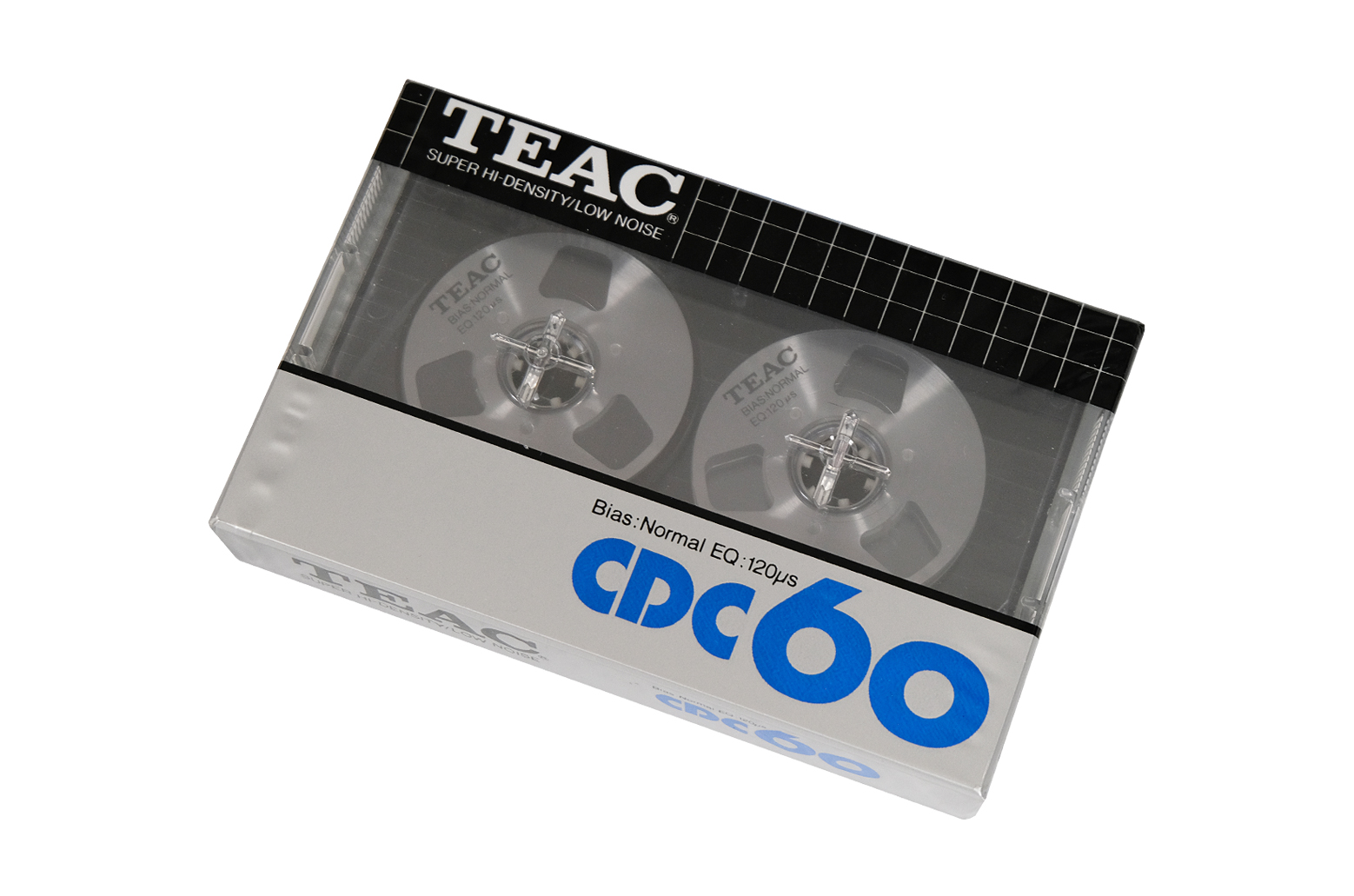
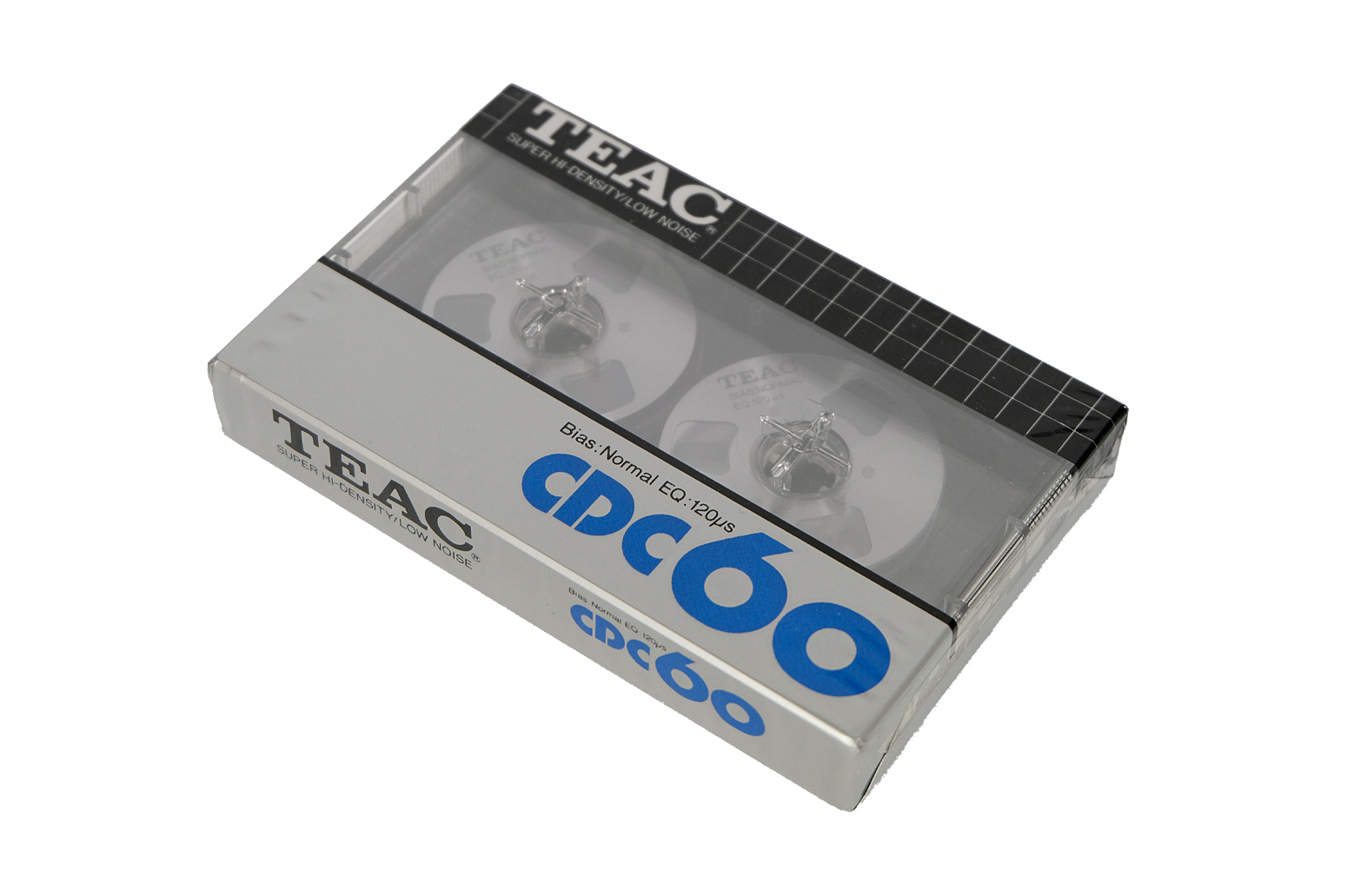
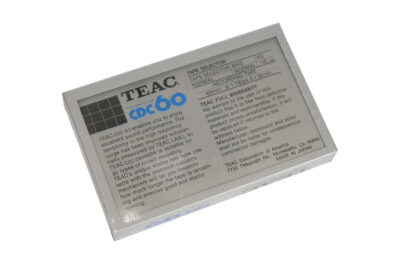
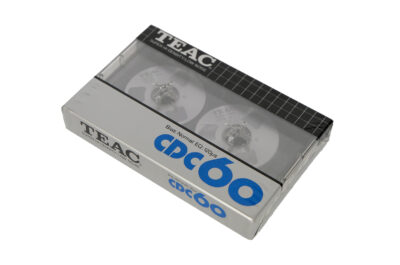
The TEAC CDC-60 is a classic Japanese Type I / Normal Position compact cassette designed for recording music, voice and radio broadcasts. The version shown in the photo features a highly distinctive design that clearly reflects the professional character of TEAC recording equipment. The silver and black packaging, large blue “CDC60” designation and large silver reels visible through the transparent section give the cassette a technical and particularly striking appearance.
One of the most distinctive features of the CDC-60 is its large reels, styled to resemble miniature reels used in reel-to-reel tape recorders. This makes the cassette stand out clearly from conventional designs with small hubs and gives it a visual character that perfectly complements classic TEAC equipment, a brand best known for its high-quality reel-to-reel recorders and cassette decks. The packaging carries the designation “Super Hi-Density / Low Noise”, emphasizing the characteristics of the magnetic tape. It was developed to provide a good recording level while keeping tape noise low. As a result, the CDC-60 was well suited to everyday music recording while retaining the universal compatibility of the Type I standard.
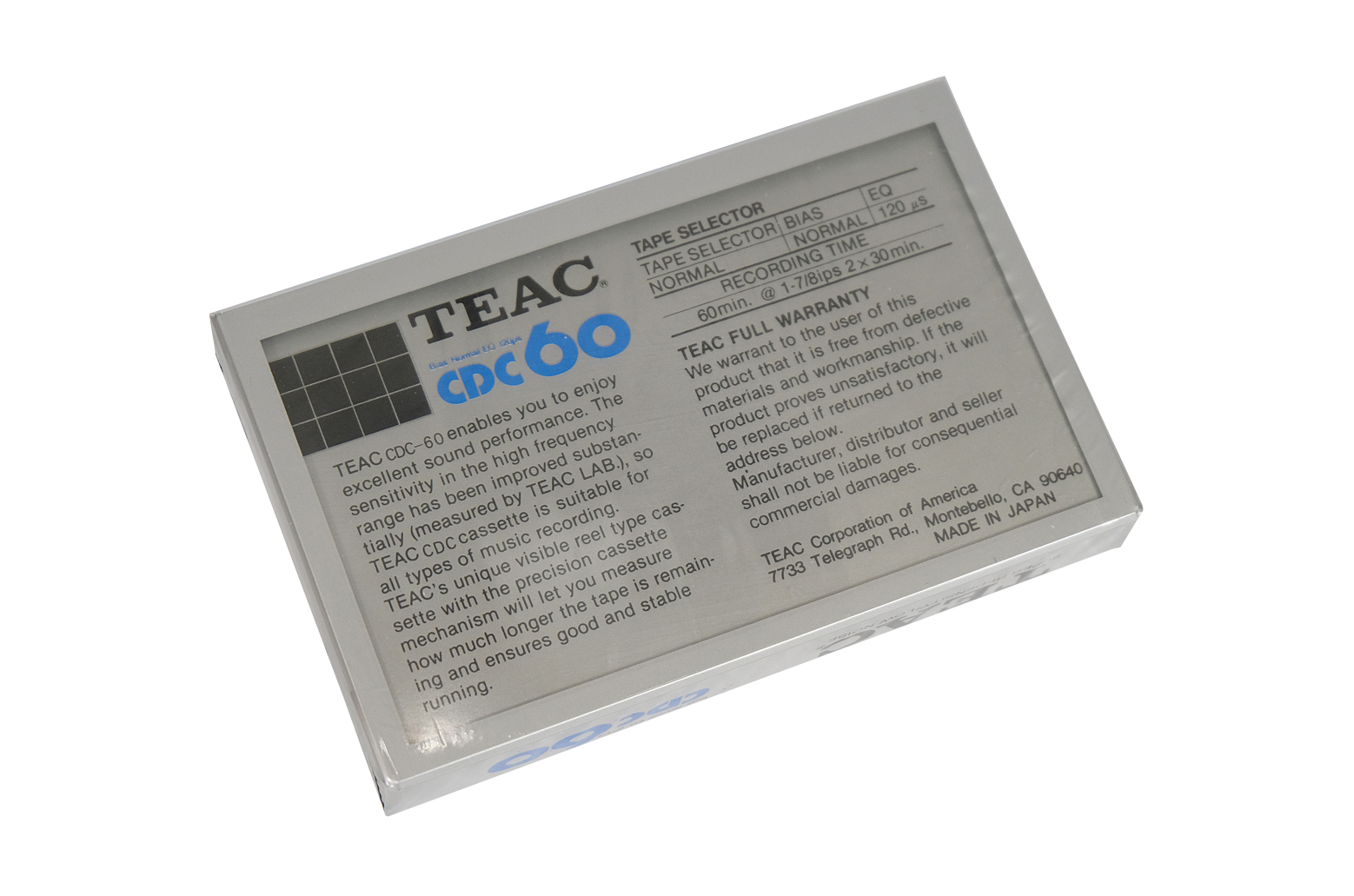
The TEAC CDC-60 uses Type I / Normal Position tape with normal bias and 120 us equalization. The information “Bias: Normal EQ: 120 us” is clearly printed on the front of the packaging. The Type I standard ensures compatibility with virtually all classic cassette decks and does not require settings intended for Type II / High Position or Type IV / Metal Position tapes. The “60” designation indicates a total recording time of approximately 60 minutes – around 30 minutes per side. Compared with popular 90-minute cassettes, the shorter recording time allows the use of thicker tape, which is mechanically more durable and less susceptible to stretching. This was particularly beneficial for cassettes intended for frequent use. Today, the TEAC CDC-60 is interesting not only as a classic analog recording medium but also as a collectible item. Its unusual large-reel design, distinctive TEAC styling and the relatively small number of surviving factory-new examples make this model particularly attractive to cassette collectors and owners of classic TEAC cassette decks.
The cassette offered for sale is factory new, has never been used and remains sealed in its original factory wrapping. It comes from the private stock of a former TEAC factory employee in Japan, who preserved a collection of cassette tapes for many years. This is therefore not a random example sourced from a warehouse, shop or collection that has changed hands many times. Throughout its entire storage period, the cassette remained in the care of one person and was kept in very good and stable conditions, protected from humidity, high temperatures and other factors that could negatively affect magnetic tape. As a result, both the original packaging and the cassette itself have been preserved in excellent condition.
Technical specifications:
– manufacturer – TEAC
– model – CDC-60
– tape type – type I / normal position
– bias – normal bias
– equalization – 120 us
– recording time – 60 minutes
– recording time per side – approximately 30 minutes
– characteristics – super hi-density / low noise
– construction – large reel-to-reel style hubs
– application – recording music, voice and radio broadcasts
– made in Japan